

URL: https://physikseminar.desy.de/hamburg/colloquia_in_2026/10_february_2026/@@siteview
Breadcrumb Navigation
Of space missions and exoplanets - Spotlight on the Ariel Space Telescope
Giovanna Tinetti (King’s College London)
Auditorium (Bldg 5, DESY Hamburg) and Zoom, 16:00h
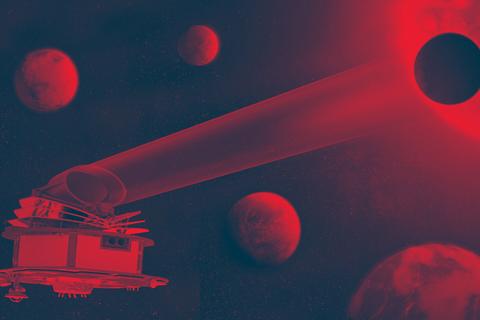
The Earth is special to us – it’s our home. But is it really special as a planet? Every star we can see in the night sky is likely to be orbited by planets. There are probably a thousand billion planets in our galaxy alone.
In about thirty years, over 6000 “exoplanets” have been discovered in distant solar systems. There are planets completing a revolution around their mother star in less than nine hours, as well as planets orbiting two or even three stars or moving on trajectories so eccentric as to resemble comets. Some of them are freezing cold, some are so hot that their surface is molten. But beyond that our knowledge falters: How many flavours of exoplanets do exist? What are they made of? How did they form? What’s the weather like there? Are they habitable?
The Ariel Space Telescope, to be launched in 2031 as part of the ESA Science Programme, is the first mission dedicated to the determination of the chemical composition of hundreds of exoplanets. Finding out why are these new worlds as they are and what is the Earth’s place in our galaxy and –ultimately– in the universe, is one of the key challenges of modern astrophysics. Ariel will bring a fundamental contribution to addressing this challenge, as I will illustrate in my talk.
We invite you to attend the presentations in person at the DESY Auditorium in building 5. We will also offer a webcast for this colloquium.
Connection details:
Zoom link: https://desy.zoom.us/j/99616528733
Meeting ID: 996 1652 8733
Meeting Password: 733220

